How to Start Reselling: Test One Lot Before Buying More
How to start reselling with one small test lot: check demand, inspect the stock, track each item, and review your costs before buying again.
By Ultimate Inventory Tracker by Cosmo Suite · Editorial policy
Published · 8 min read
General information, not tax or accounting advice.
Reselling can begin with one narrow category and a small lot you can inspect yourself. Before you pay, check whether similar items have sold, estimate the full amount you may tie up, and decide how you will record each piece from purchase to sale.
A low price tells you little by itself. You still need to identify each item, check its condition, and see what remains after costs before buying another lot. This guide follows one test lot from sourcing to review. The example is fictional and makes no promise of sales or profit.
In Short
- Choose a category you can identify and check.
- Look at completed sales for close matches, not only asking prices.
- Inspect every item and keep the receipt or purchase record.
- Calculate the purchase cost per piece, then list other costs separately.
- Start with one lot. Review what sold and what remains before you source again.
What should you decide before buying resale stock?
Before buying, choose the type of item, the buyer you expect to reach, and the evidence you will use to judge demand. Set a maximum amount of cash to commit. Then check condition, storage, shipping needs, and whether you can describe each item honestly. This keeps the first purchase tied to a clear question instead of a bargain feeling.
| Check | Ask before you buy | What to write down |
|---|---|---|
| Item | Can you identify the model, size, or version? | Name and distinguishing details |
| Buyer | Who would look for this item? | A plain description of the likely buyer |
| Demand | Can you find completed sales for close matches? | Search phrase, date, and the matches reviewed |
| Condition | Can you inspect the whole lot? | Defects, missing parts, and uncertainty |
| Cash at risk | What is the full amount due now? | Purchase, travel, packing, and known fees |
| Next step | Can you photograph, store, and list it? | Where it will stay and how you will track it |
The Small Business Administration's market research guide recommends examining demand, market size, location, saturation, and pricing when researching a market. For a first lot, keep the question smaller: can you find close, recent completed-sale examples for this exact type and condition?
A high asking price shows what a seller hopes to receive. A completed sale is a recorded transaction for an item, rather than a live listing price. Comparable completed sales show what buyers paid, but they cannot promise what your listing will earn.
How do you find an item worth testing?
Start with one category you can recognize and inspect. Search the exact item name, model, size, or version on the marketplace where you may list it. Compare completed sales with similar condition and included parts, and note when the matches differ from your item.
Keep the first search narrow. “Vintage camera” covers many models and conditions. A model number and lens type give you a more useful comparison. Clothing also varies by size, label, fabric, wear, and season. A close match matters more than a long list of loosely related results.
Write down three things as you research: what sold, what was different, and what you still cannot confirm. If you find only asking prices or cannot identify the item, pause. The unknowns belong in the decision, even when the lot looks inexpensive.
If the category involves authenticity, safety, recalls, or restricted goods, do not rely on a quick listing search. Check current official guidance for that item and your location. If you cannot verify what it is or whether it can be listed, leave it out of the first test.
How do you check a lot before you buy it?
Inspect the lot item by item when possible. Confirm the count, condition, included parts, and the seller's terms. Ask what happens if the count or condition differs from the description. Save the receipt or other purchase evidence, and avoid treating an unverified detail as fact.
Resale lot is a group of items bought together for later sale. In a mixed lot, one price can hide different conditions and different resale paths. Sort the items before deciding what can be listed, what needs more checking, and what should stay out of the usable count.
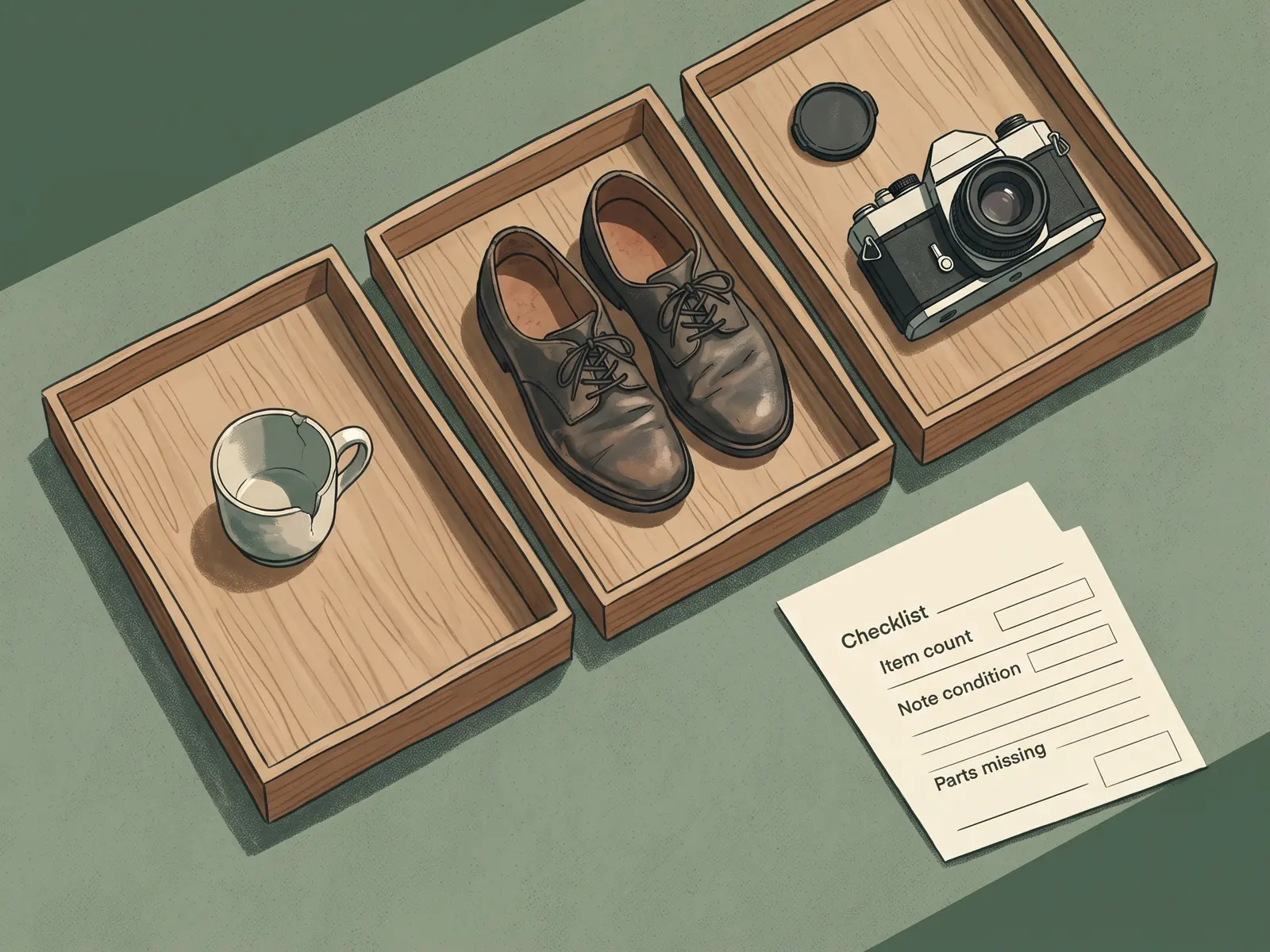
Use a simple intake record. Give each item a short name or code, then note its condition and any issue that will matter to a buyer. A photo can help you distinguish similar pieces later. Keep uncertain items in a separate group until you know enough to describe them.
Check the total commitment, not only the sticker price. A trip to collect a lot, packing supplies, marketplace charges, shipping, and returns can affect what remains. Some of these amounts may be unknown before a sale. Record them as unknown instead of filling in a convenient guess.
Use actual quotes, receipts, and current platform terms for your own situation. Keep amounts you have not paid or confirmed separate from the purchase cost, so an unknown fee does not become a made-up number in your notes.
How do you calculate a first lot's cost per item?
Divide the lot's purchase amount by the number of usable items to get a basic purchase cost per item. Keep other costs in separate rows until you know them. This is a tracking example only; it is not accounting, tax, pricing, or profit advice.
| Figure | Example | Calculation |
|---|---|---|
| Items in a fictional lot | 40 | Counted at intake |
| Purchase amount | $120 | Amount paid for the lot |
| Purchase cost per item | $3 | $120 ÷ 40 |
| Platform, packing, travel, or shipping costs | Not assumed | Record actual amounts separately |
Imagine a reseller buys a fictional thrift lot of 40 items for $120. The simple purchase cost is $3 per item. That figure does not say what any item will sell for, whether all pieces are usable, or what fees and shipping will cost.
If two pieces are damaged, do not silently keep dividing by 40 as though all pieces are ready to list. Record the count and condition you actually found. The point is to see what is known and what remains uncertain, not to manufacture a reassuring margin.
For your own tracking, save the item count, purchase date, source, receipt, and any later costs with the lot. The IRS recordkeeping page explains federal recordkeeping topics and supporting documents. Tax rules depend on a seller's circumstances, so use official IRS material or a qualified tax professional for tax questions.
How should you list and track a test lot?
Use one clear record for each item or item group. Include name, quantity, condition, purchase reference, listing location, and sale status. Update it when stock changes, and keep the receipt or source document so you can check your notes later. A short stock code can distinguish similar versions; see a practical inventory spreadsheet.
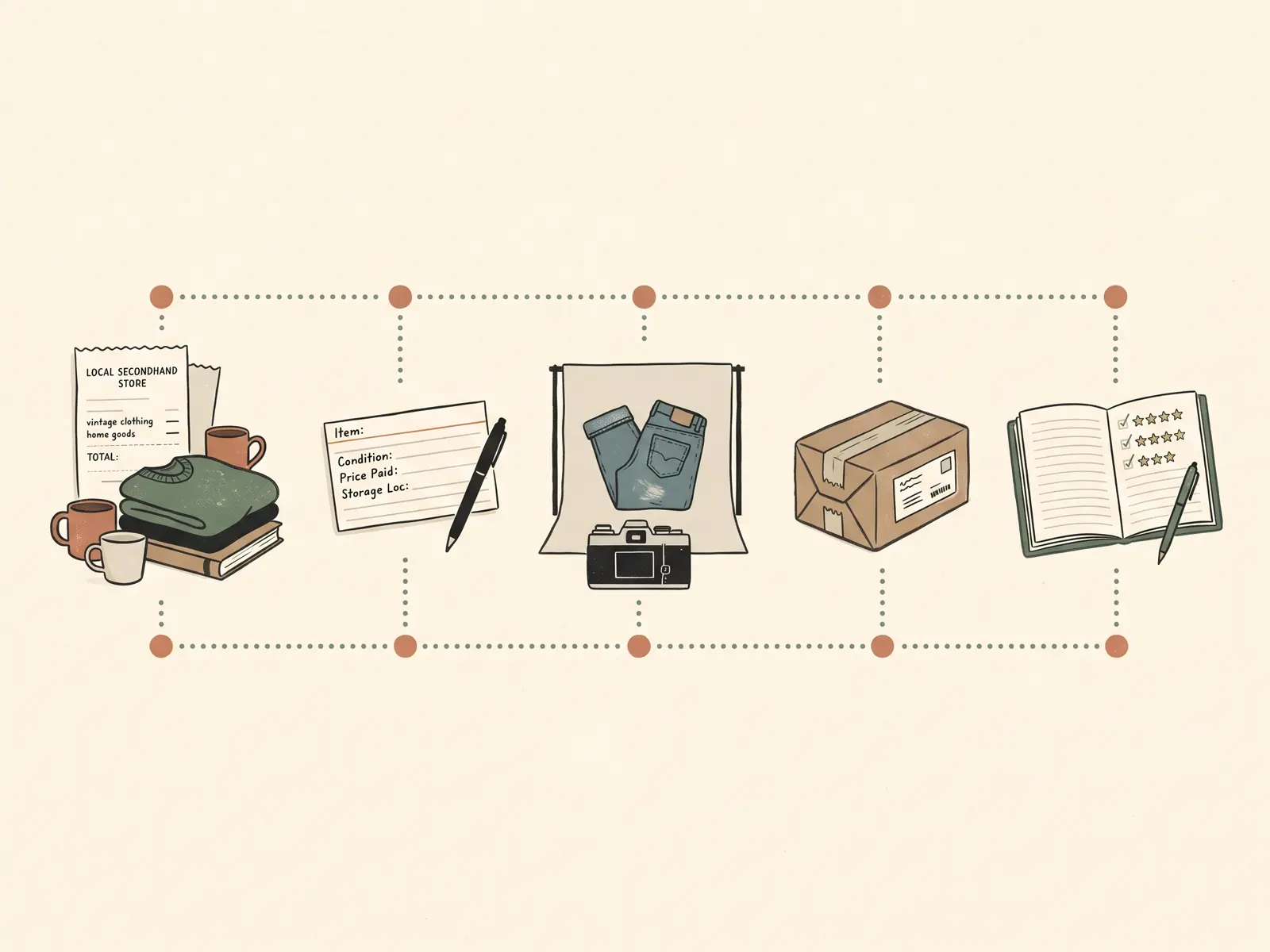
Write listings from what you can verify. Show the item from useful angles, describe wear and missing parts, and use the size or model details a buyer needs. Do not copy a description from a different item. If you sell through more than one place, keep a routine for recording each sale so the remaining count does not depend on memory.
Keep the lot record and item records connected. The lot record holds the seller, purchase date, receipt, total paid, and initial count. Each item note holds the details a buyer needs and where the item is listed. When a sale happens, update the item count and status while the listing is still open in front of you.
For a physical count, compare what is on the shelf with your record. Note a mismatch and investigate it before changing the number. A returned, damaged, donated, or personally used item should not disappear from the record without a note about what happened.
If you track stock in a sheet, this Google Sheets inventory template guide explains how to organize entries. A spreadsheet will not connect every marketplace or till. Check the tools you use and keep a manual handoff where needed.
When should you buy another lot?
Wait until you have reviewed the first lot. Count what remains, confirm which items sold, and collect the actual costs you can verify. Compare those results with your original notes. If demand, condition, time, or cash tied up is still unclear, use that uncertainty as a reason to pause.
Use a short review with four questions:
- Which items sold, and where were they listed?
- Which items remain, and are their condition notes still accurate?
- Which costs have receipts or platform records, and which are still unknown?
- What would you change before buying the same category again?
Use those answers to make a next-step note. For example, you might keep the category but change the condition rule, or wait until the remaining items sell. If you cannot tell what caused a result, leave the next purchase undecided and gather better notes first. A review is useful when it records uncertainty as well as confirmed sales.
Do not judge a lot only by its most promising item. Slow-moving pieces still occupy space and cash. A written review can show whether the category is worth another test, whether the sourcing rule needs to change, or whether you should stop and clear the remaining stock first.
There is no fixed number of days that proves a lot has succeeded. The timing depends on the item and where you list it. Set a review date that fits your category, then use actual listings and sales rather than an assumed sales pace.
How the Ultimate Inventory Tracker Handles This
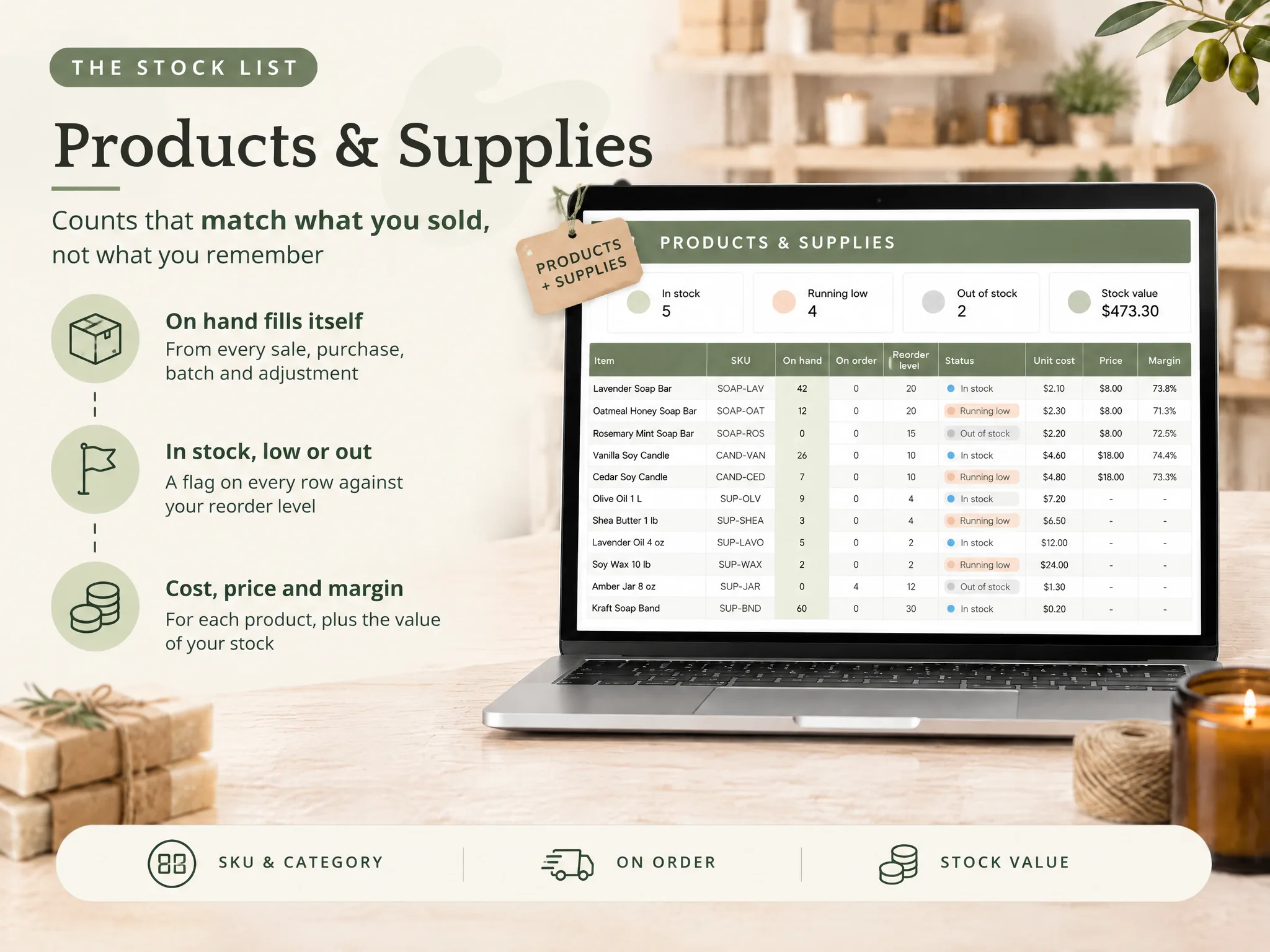
The Ultimate Inventory Tracker (by Cosmo Suite: one Google Sheets and Excel file, 12 tabs, $9 once) is a file for recording stock, purchases, sales, and adjustments. It can show stock by place and includes a Reorder List. It does not connect to an online shop or till, scan barcodes, or log a marketplace sale for you.
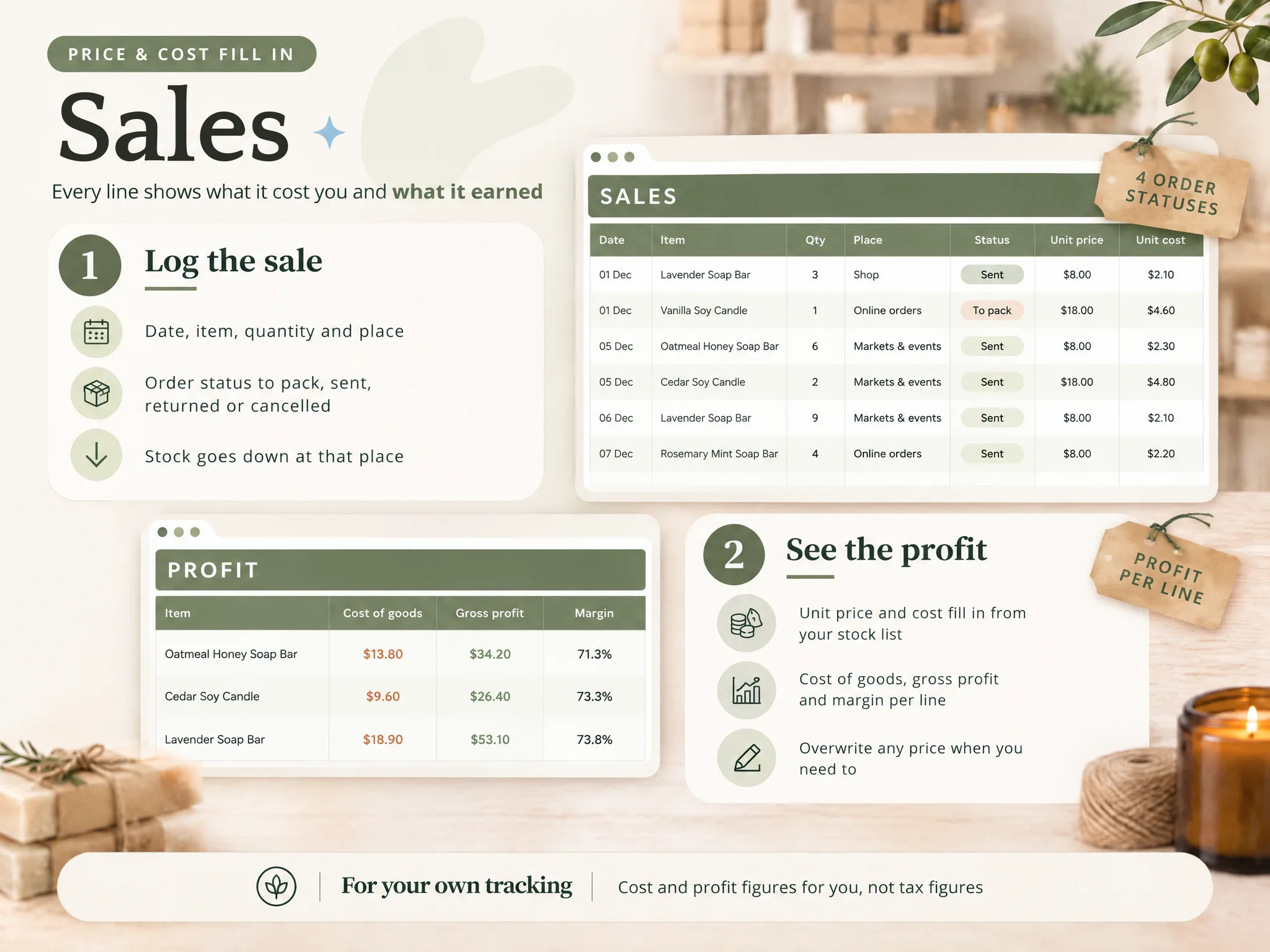
For a reseller who wants one place to record purchases and sales, the inventory tracker spreadsheet includes Products & Supplies, Purchases, Sales, Adjustments, and a Dashboard. You enter or paste each sale yourself. Cost and profit fields are for your own tracking, not tax figures.
Start with the simplest record you will keep current. If the test lot grows across items or places, a ready-made inventory tracker for logging stock movements may be worth comparing with your current sheet. The file is made for Google Sheets and Microsoft 365 Excel; it is not a substitute for marketplace rules, accounting advice, or a connected point-of-sale tool. See about Cosmo Suite or use the contact page for questions about the file.
Frequently asked questions
How much money do I need to start reselling?
There is no useful universal amount. Set a limit you can afford to leave tied up, then include the purchase, transport, packaging, and any platform costs you can verify before buying.
What is the easiest thing to resell?
There is no one easiest category. Start with items you can identify, inspect, store, and describe accurately. Compare completed sales for the same item and condition before you choose a lot.
Where can I find items to resell?
Possible sources include local secondhand shops, estate sales, clearance sections, and direct suppliers. Check the source, condition, quantity, and return terms before you commit.
How many items should I buy for my first resale lot?
Choose a quantity you can inspect, list, store, and track without guessing. A small test is useful when it limits the cash at risk and gives you a clear way to review each item.
What records should a reseller keep?
Keep purchase evidence and a separate record of each item's description, quantity, condition, cost, listing, and sale. For official tax record guidance, use the IRS resources linked in this article.
Is reselling legal?
Rules can depend on the item and where you sell it. Check current official guidance for your location and product category; this article does not give legal advice.
