Finished Goods Inventory: Supplies In, Pieces Out (A Maker's Example)
Finished goods inventory means completed pieces ready to sell. Follow one maker's batch from supplies to shelf, with a simple way to record each stage.
By Ultimate Inventory Tracker by Cosmo Suite · Editorial policy
Published · 8 min read
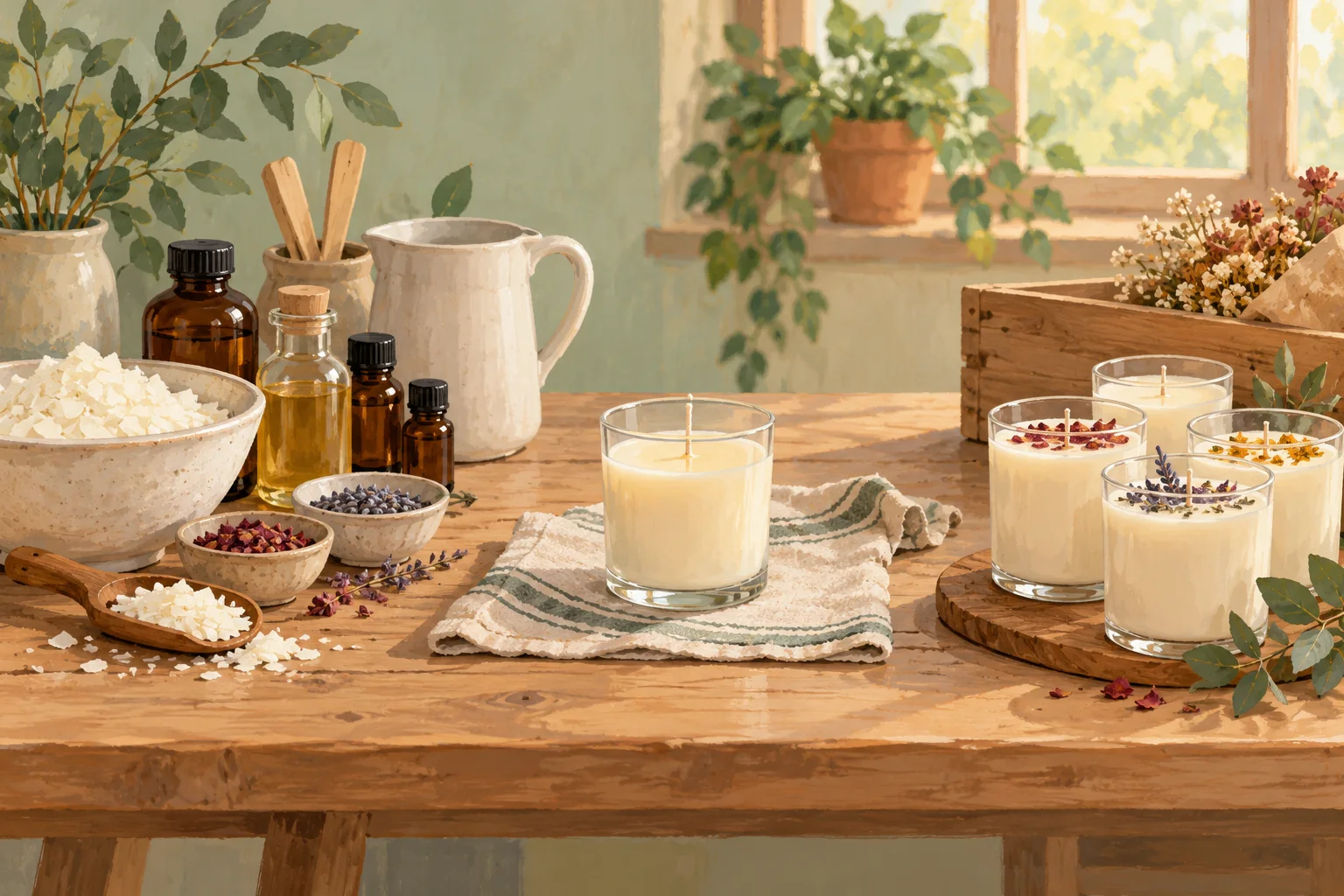
A finished goods inventory is the completed stock you are ready to sell. It sits at the end of a maker's production path, after supplies have been used and the work is complete.
At market packing time, the three stages may sit side by side. You have jars of wax on one shelf, candles cooling on a tray, and packed candles by the door. Only the last group is ready to sell. Keeping those stages clear helps you know what you can offer and what you can make next.
For a small shop, track the item, unit, quantity, place, and stage. Then record the batch that moves supplies into finished pieces. A spreadsheet inventory tracker for a small maker can hold those records together, but you still enter the batch and sale yourself.
In Short
- Finished goods are complete pieces ready for sale.
- Keep supplies, unfinished batches, and finished pieces in separate stages.
- Record the batch that uses supplies and adds finished pieces, then count by item and place.
What finished goods inventory means
Finished goods inventory is the quantity of completed products that remain ready for sale or shipment. The U.S. Census Bureau defines finished goods as completed products ready for shipment and goods bought for resale that need no further processing.
For a maker, “ready” is a practical decision. A candle may need to cool, a soap bar may need to cure, or a print may need its final check and sleeve. Decide what finished means for each product, then use that same point every time you count.
The stock record in one line
| Stage | What belongs there | What changes the quantity |
|---|---|---|
| Supplies | Materials waiting to be used | Purchase, use, count adjustment |
| Work in progress | A batch still being made or finished | Start, complete, spoilage, count adjustment |
| Finished goods | Complete pieces ready to sell | Batch completion, sale, sample, damage, adjustment |
This is a physical stock view. It tells you what you can find and where. It does not set the accounting value of inventory or tell you which tax rules apply. Keep costing and tax decisions with a qualified professional.
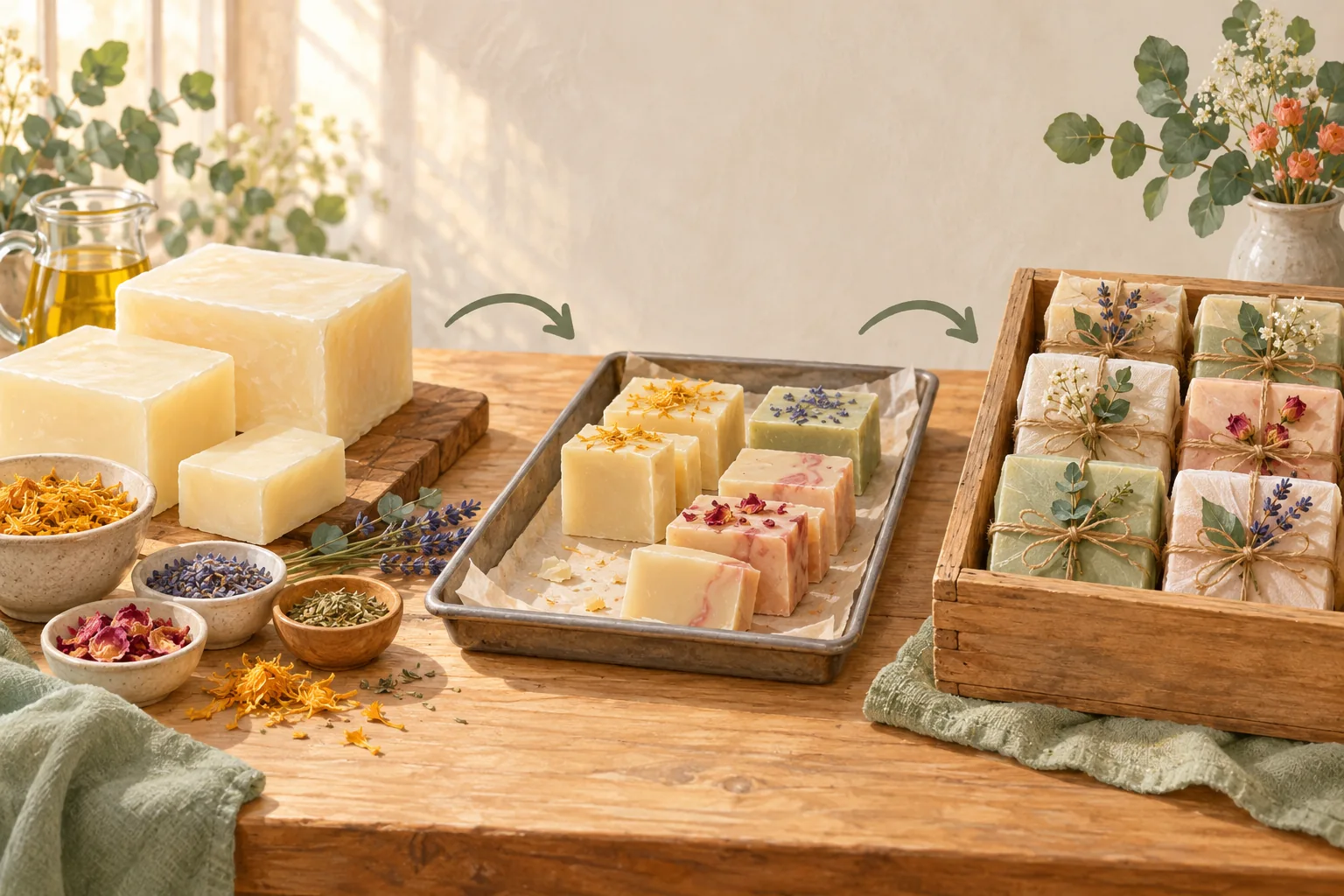
Raw materials, work in progress, and finished goods
Raw materials are inputs for a product, work in progress is still being made, and finished goods are complete and available for sale. The BEA inventory glossary describes the same broad groups: materials and supplies, partly processed goods, finished goods, and goods bought for resale.
The handoff matters because each stage answers a different question. Supplies tell you what you can make. Work in progress tells you what has started but is not ready. Finished goods tell you what you can offer today.
For example, wax and wicks are supplies for a candle maker. A poured candle waiting to cool or be checked is work in progress. A candle that meets your own sale-ready standard belongs in finished goods. For a crocheter, yarn is a supply, a partly made bag is work in progress, and a completed bag ready for a stall is a finished piece.
Keep units consistent. Count candles as each, yarn by grams or skeins, and fabric by the measure you use to make products. If your recipe uses grams but you buy by the skein, record the conversion you use so the material count remains understandable.
Finished goods inventory: what to use when
Use a finished-goods list when you need to know what is ready to sell; add movement records when you need to explain how stock changed. The Business Queensland stock-control guide also separates raw materials, work in progress, and finished goods as different stock types.
| Your question | Record to use | What it will show |
|---|---|---|
| What pieces are ready to sell? | Finished-goods item list | Item, unit, quantity, and place |
| What did I make? | Batch or production record | Product, quantity made, date, and recipe used |
| What materials remain? | Supplies list and purchase/use log | Materials received and used |
| Why did the quantity change? | Sales, batch, and adjustment entries | The recorded movement behind the current count |
| Where are the pieces? | Place-level stock count | Home, shop, market box, or another location |
A list can work when stock moves rarely and you count it often. A movement log helps when purchases, batches, or sales happen between counts. If you sell at a stall and online, record each sale by place so the total does not hide where the pieces are.
The inventory spreadsheet guide covers the basic columns and stock calculations. For handmade products, the craft inventory spreadsheet example shows how supplies, recipes, batches, and finished pieces fit in one record.
The maker's month, worked through
For example, an illustrative soap-and-candle maker can follow a batch from wax and wicks to candles on a market shelf, then record the sale against the right place. The example shop has 24 products and supplies, three places, 41 sales, and two batches: 24 soap bars and 18 candles. These are plan figures for an example, not customer results.
Start with the supplies. The maker has wax and wicks listed as separate items, with their units and current places. A candle recipe names the amount of each supply used for one candle. The recipe helps connect the batch to the materials it consumes.
When production starts, the candles are not ready-to-sell stock. They are work in progress until the maker's finishing steps are complete. The record should not count those same candles as both finished and unfinished. A clear stage avoids showing more ready stock than the shelf holds.
When the batch is complete, record the quantity made and the finished item. The recipe provides the expected material use. The finished-goods count rises by the number of completed candles, while the supplies count falls by the amount used. If a candle fails the maker's check, keep it out of sale-ready stock and record what happened using the shop's normal adjustment method.
Now place matters. Some candles sit at home, some may go in a market box, and others may be reserved for online orders. A total across all three places can look healthy while the market box is nearly empty. Record transfers when stock moves, or count each place separately before packing.
After a sale, reduce the finished quantity for the place where it happened. If the sale was at a market, the entry belongs to that market place. A spreadsheet will not know about a cash sale unless you enter it. The same applies to an online order without a supported shop connection.
Use the finished count for today's orders and market packing. Use the supplies and batch records to see whether you can make the next batch.
How to record a batch moving into finished goods
Record a batch in a way that connects supplies used with complete pieces created. You can keep the steps simple, even if each entry goes into a different part of your inventory sheet.
- Name the product and its unit. Use the same name and unit in the recipe and item list.
- Check the recipe. Confirm which supplies go into one finished piece and how you measure them.
- Record the batch. Note the product, number made, and date. If the batch is still cooling, curing, or being checked, leave it in work in progress.
- Move completed pieces to finished stock. Add only the pieces that meet your ready-to-sell rule, and record their place.
- Compare both sides. Check the remaining supplies and finished pieces against what you can see. Record a confirmed difference with a reason instead of changing a formula result by guesswork.
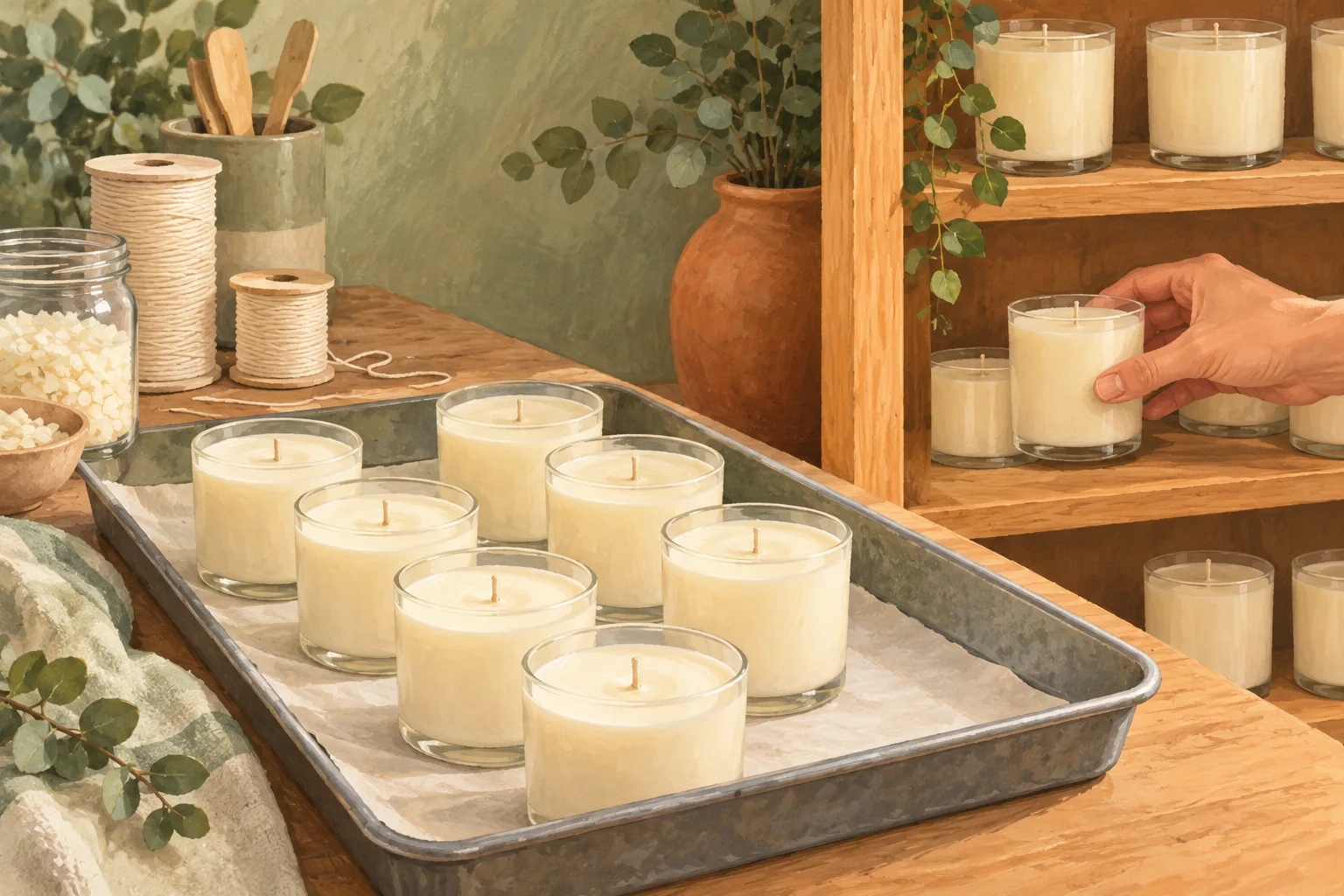
The U.S. Census Bureau's inventory definitions distinguish materials, goods still in production, and completed goods. Your small-shop record does not need to copy a manufacturer's accounting system to benefit from the same clear handoff.
What a finished-goods count can tell you
A finished-goods count tells you the completed quantity you can locate at a specific place and time. Write the count date, item, unit, and place beside it. Without those details, a number can be hard to compare with a later count.
Count variants separately when you sell them separately. A blue pouch and a red pouch may share a pattern, but they are different pieces if a buyer chooses a colour. Candles with different scents or sizes also need separate rows when you need their quantities separately.
Keep damaged items, gifts, and samples out of sale-ready stock. Record them as a sale, sample, damage, or adjustment according to what happened. That keeps the finished quantity tied to what remains available for a buyer.
A count does not explain why a number changed. If the shelf and record disagree, check recent batches, sales, transfers, samples, and damage. Then compare the item, unit, and place. Make a short note of the count before updating the record.
The step many finished-goods lists miss
The batch handoff has two sides: materials used and finished pieces created. If you only add the completed candles, you may know what is ready to sell while missing the wax and wicks needed for another run.
Start with the recipe and compare expected use with the supply count. Then compare the finished quantity with the pieces that passed your own completion check. Differences can come from a wrong unit, an incomplete batch, a damaged piece, or an entry that was missed. The record points you to what to check; it cannot identify the cause by itself.
This is a useful moment to confirm that the recipe still matches how you make the product. If the design changed, update the recipe for future batches and keep past entries clear. Do not silently change the quantity already recorded for an older batch.
The same check helps with restocking. If the finished count is low but supplies remain, you may be able to plan another batch. If a key supply is low, the finished-goods total alone will not show that constraint. Check the supplies list before promising a restock date. A ready-made inventory tracker for a small maker can keep that batch and supply record beside the finished count.
How the Ultimate Inventory Tracker handles this
The Ultimate Inventory Tracker is one Google Sheets and Excel file with 12 tabs, sold for $9 once. It includes product and supply records, recipes, batches, sales, purchases, adjustments, transfers, stock by place, and a reorder list. Those tabs can keep finished pieces beside the material and movement records that explain their counts.
The file gives you a starting structure for those records. You still enter the batch and each sale yourself. It does not connect to an online shop or till, scan barcodes, or guarantee that your physical count matches the sheet.
Use a Google Sheets and Excel inventory file with recipes and batches if you want those records in one place. If a simple list fits how often your stock changes, keep using it and add movement details only when they answer a question you need to solve.
Ultimate Inventory Tracker is a Cosmo Suite product. The About page identifies the publisher, and the editorial policy explains how sources and product details are checked.
Frequently asked questions
What is finished goods inventory?
Finished goods inventory is the completed stock you can offer for sale. For a maker, that could be a candle that has cooled, passed your own checks, and is ready to pack or display. Keep it separate from materials and unfinished batches so you know what is ready now.
What is the difference between raw materials and finished goods?
Raw materials are supplies you use to make a product. Finished goods are the completed products ready to sell. A candle maker may list wax and wicks as supplies, then add finished candles to stock when a batch is complete.
Is work in progress part of finished goods inventory?
No. Work in progress still needs a production step before it is ready to sell. Keep partly poured, curing, or unwrapped items in a separate stage until they meet your own ready-to-sell standard.
How do I calculate finished goods inventory?
For a physical stock count, add completed unsold pieces by item and place, using the same unit each time. Accounting valuation uses separate costing rules. Ask a qualified bookkeeper or tax professional which method applies to your records.
Do retailers have finished goods inventory?
A retailer usually buys products ready for resale, so those products are merchandise or goods for resale. Makers often separate supplies, work in progress, and finished products because they make the items they sell.
Can a spreadsheet update finished goods after an online sale?
Only if it has a supported connection or you enter the sale yourself. The Ultimate Inventory Tracker does not connect to an online shop or till, so you log or paste each sale.
Sources
Keep reading
Makers and Markets
Craft Inventory Spreadsheet: Track Supplies and Finished Pieces Together
Craft inventory spreadsheet: track materials, recipes, batches, and finished pieces in one file. See the rows a maker needs and when a sheet fits.
· 7 min read
Makers and Markets
Bill of Materials Template for Excel: Cost One Piece of What You Make
Bill of materials template excel for makers: the eight columns, one candle and one soap bar costed line by line, and a batch that takes supplies off the shelf.
· 12 min read
Makers and Markets
How Much Inventory to Bring to a Craft Fair (Use Last Fair's Numbers)
How much inventory to bring to a craft fair depends on past sales, the products that moved, and what you can carry. Plan each item’s count.
· 8 min read
