Types of Inventory: A Maker's Batch from Supplies to Finished Goods
Types of inventory: follow craft supplies, unfinished work, and finished pieces through one maker's batch, then use a table to decide what to count next.
By Ultimate Inventory Tracker by Cosmo Suite · Editorial policy
Published · 9 min read
General information, not tax or accounting advice.
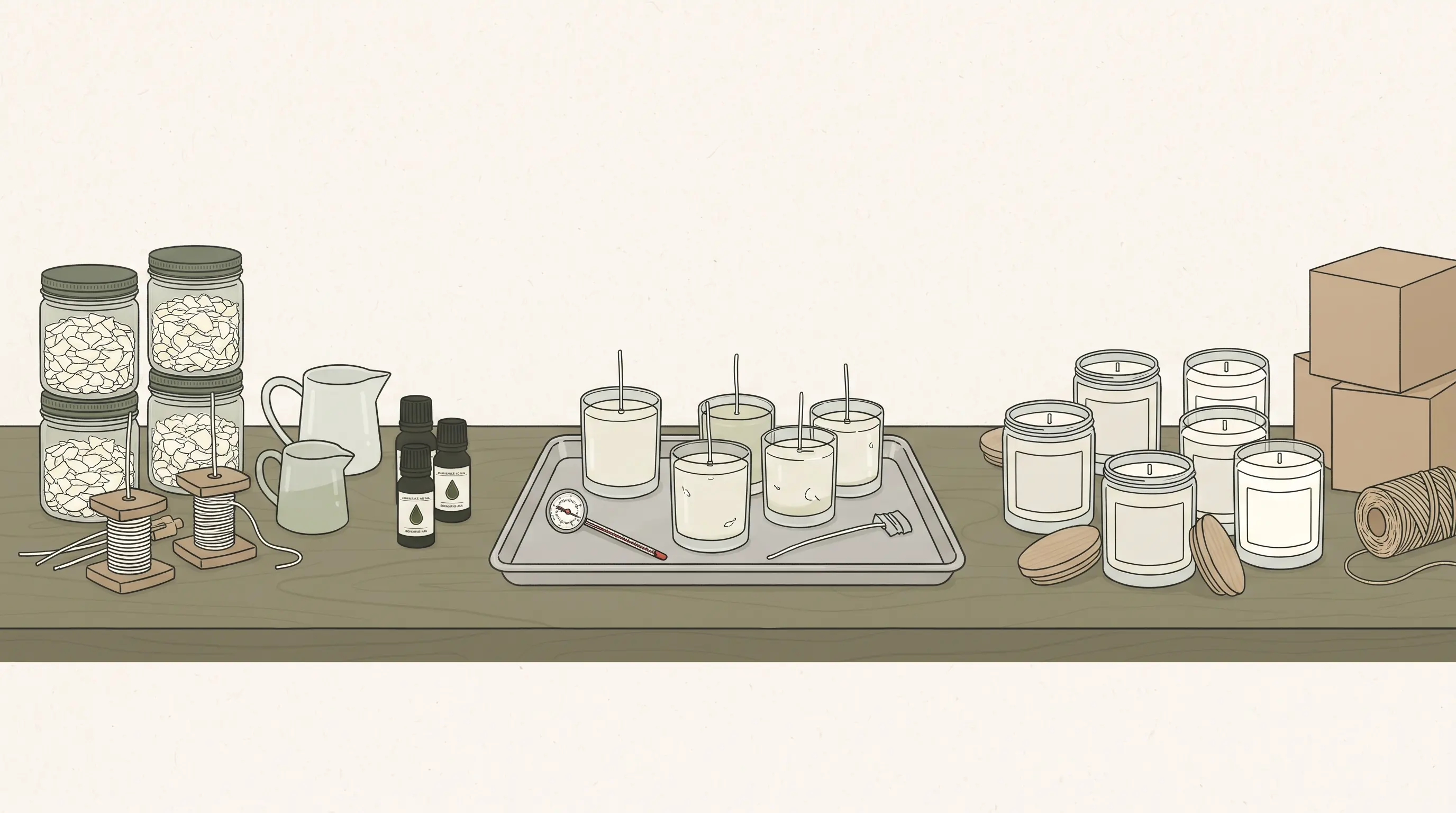
Small makers can have three kinds of stock in the same room: materials waiting for a project, pieces partway through a batch, and finished work ready for a customer. If they all sit under one label, it's harder to see what you can make next and what is ready now.
For a maker, the three common types of inventory are raw materials, work in progress, and finished goods. The difference is the item's next step: wait to be used, continue through a making step, or offer it for sale. A clear count keeps those stages apart without turning a small workroom into a warehouse system.
In Short
- Raw materials and supplies are inputs you have not used yet.
- Work in progress is partway through a making process.
- Finished goods are complete pieces that meet your standard for sale.
- Track a material again when it changes stage, not just when it changes shelf.
Types of inventory at a glance
Inventory types describe where stock sits in your work, from material you have not used to a completed piece ready to sell. Business Queensland groups stock into raw materials, work in progress, and finished goods in its stock-control guide. A small maker can use those labels to decide what to count and what action comes next.
| Stage | What it means | Maker example | Next action |
|---|---|---|---|
| Raw materials or supplies | Items waiting to be used | Wax, wicks, fragrance, jars | Buy, count, or set aside for a batch |
| Work in progress | Items that have started but are not complete | Poured candles cooling or soap curing | Finish, inspect, record waste, or return unused supplies |
| Finished goods | Complete pieces ready for sale | Candles cooled, checked, and ready to pack | Count by item and place; record each sale |
Think of the stages as the item's next stop. It moves from raw supply to active work to a completed piece, even if the shelf stays the same. The same physical item can move from one group to another as you use it, make something from it, and finish that piece.
For a broader stock list, see this inventory spreadsheet guide for small sellers. It covers the basic item and quantity records that help keep supplies and completed pieces findable.
The maker's month, worked through
A maker's batch gives the three labels a practical job. One sample maker tracks 24 products and supplies, three selling places, 41 sales, two batches, and three items flagged as running low. Treat those as one example's records, not a typical result. The useful part is the move from supplies to completed pieces.
Start with the materials. Wax and wicks wait as supplies until the candle batch begins. Oils, colorants, and molds may support the soap batch. Keep each item in a countable unit, such as ounces, grams, each, or a pack, and stick to that unit when you use it.
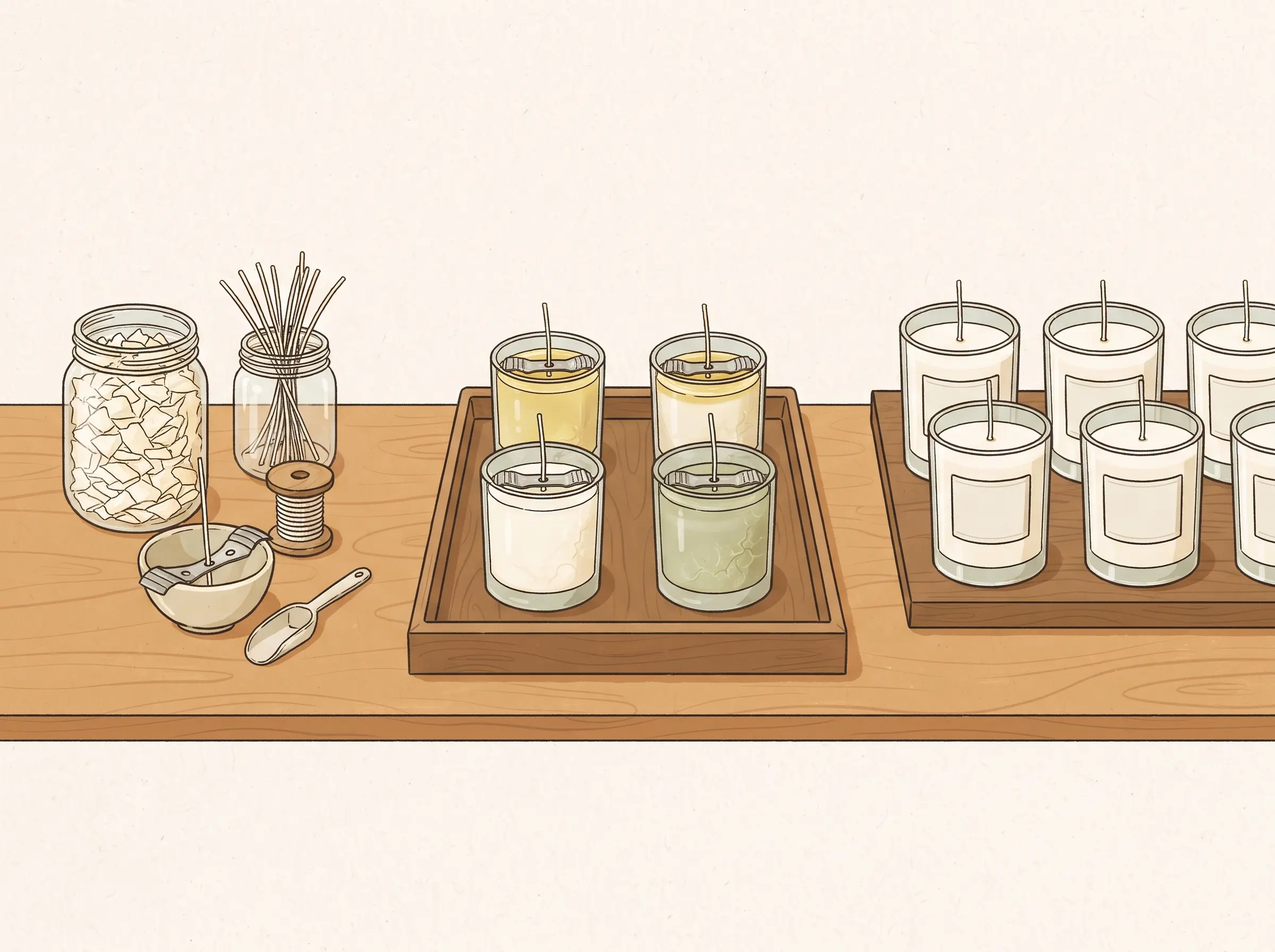
When the maker begins a batch, some supplies leave their storage count and enter the work in progress stage. The candle batch in the sample maker's month has 18 candles. Until those candles meet the maker's finish standard, they are not counted as ready-to-sell stock.
After the finishing step, the batch adds completed candles to the finished-goods count. A sale later reduces that count. If some candles are set aside as samples or damaged, record that change separately so the remaining count still matches what is ready to offer.
The arithmetic is a stock movement, not a promise about output: materials used leave the supply count, completed pieces enter finished stock, and sales reduce finished stock. Do not count the same physical piece in two stages at once. The maker's inventory spreadsheet walkthrough shows a real example of the product's supplies, recipes, batches, and stock-by-place tabs.
If you pause halfway through a batch, the stage labels show which inputs remain available, which pieces still need work, and which ones you can pack now. They help after a market or busy week, too. Ask “what stage is this item in?” before you decide where it belongs.
Raw materials, work in progress, and finished goods
Raw materials are items you use to make something, work in progress has started but needs more work, and finished goods are complete and ready to sell. The Lean Enterprise Institute's inventory glossary describes these labels as positions in a production process. For a small maker, the same idea works at a bench, kitchen table, or sewing machine.
Raw materials and supplies
Raw materials include inputs that become part of a product, such as wax in a candle or yarn in a crocheted hat. You may also track packaging, labels, and other supplies that support the product. Keep these in the supply stage until you use them.
A physical label answers “where does this live?” A quantity record answers “how much is here?” Those are related but separate jobs. Organizing craft supplies on shelves and in bins can help you set up storage, while a count record helps you decide whether the supply is running low.
Use a unit you can repeat. Count jars as each, fabric by the length you cut, or wax by grams if that is how you weigh it for a recipe. If you buy a material in one unit and use it in another, write down the conversion you use. Otherwise, your count can drift even when you return every leftover item.
Work in progress
Work in progress, also called work in process, includes items that have entered a production step but are not finished. Business Queensland describes it as partly finished materials and goods in production. A candle that is poured but still cooling, or a bag that needs its straps sewn on, fits the everyday version of this stage.
Choose a clear “started” point. For one maker, that may be when the recipe is mixed. For another, it may be when a cut fabric bundle is assigned to a bag. The exact point can vary, but use one rule for the same product so a part-finished item does not disappear between counts.
If you stop work, record what is still usable and what is not. Unused wax can return to supplies if it is safe and suitable for reuse. A candle that failed a check may need a separate adjustment or waste note. Do not add it to finished goods just because it has left the mold.
Finished goods
Finished goods are completed items that are ready for sale or delivery. The Australian government's inventory management guide uses ready-to-sell, boxed chairs as an example. A maker can apply the same boundary to a cured soap bar, a checked print, or a packed candle.
Set the finish rule before the next count. For instance, a candle may need to cool, pass the maker's check, and receive its label before it moves to finished stock. Another shop may count it as finished before packing. What matters is that the rule matches the seller's actual workflow and stays consistent.
Count completed pieces by product and place if that helps you find them. Keep a separate record for sales, samples, gifts, breakage, or corrections. These movements explain why the number changed. They do not replace a physical count when you need to confirm what is on the shelf.
Types of inventory: what to track when
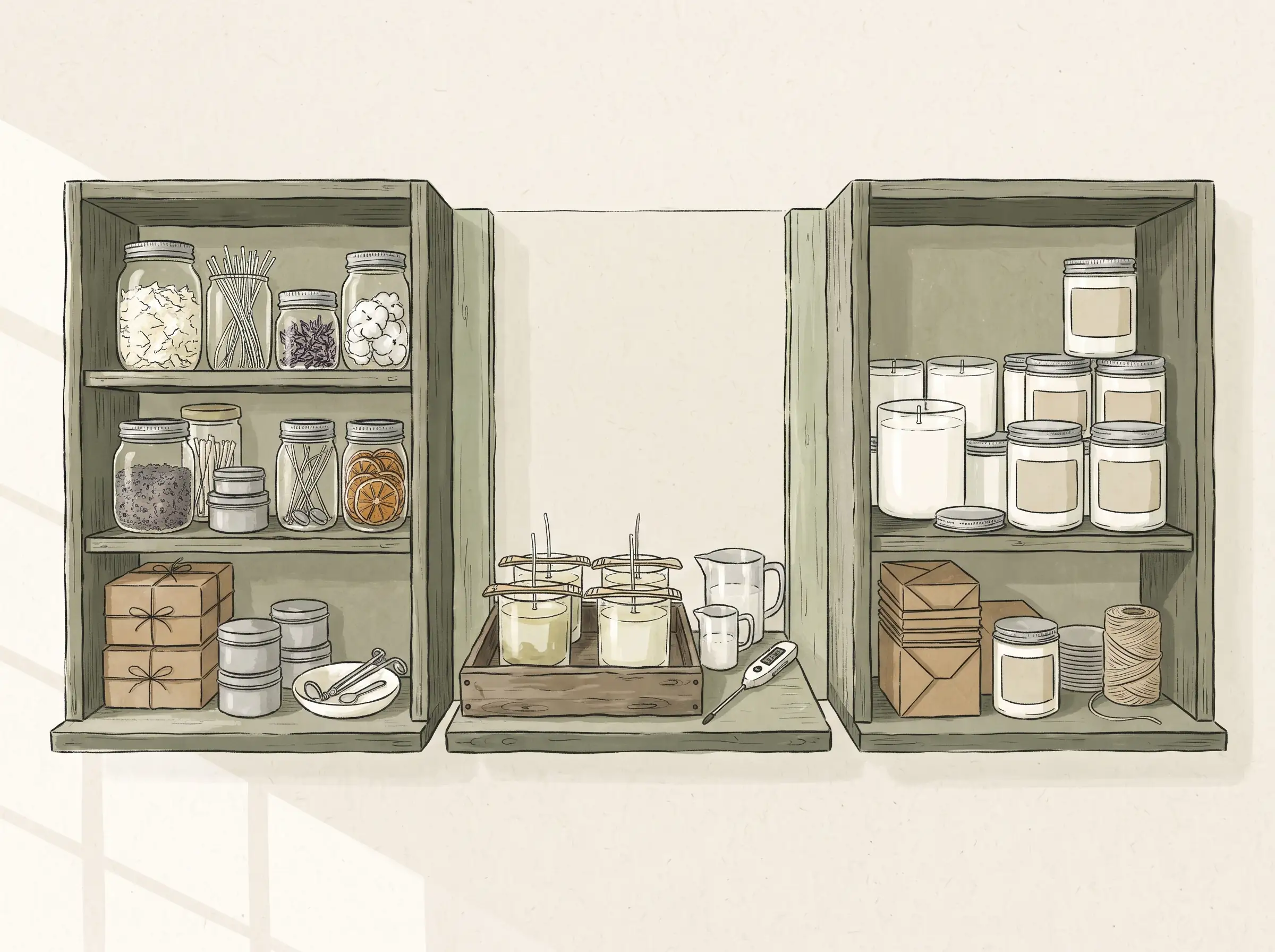
Use the stage that matches the item's next step, then choose a record that answers the question you have. A supplies list tells you what can be used; a batch note tells you what is underway; a finished-goods count tells you what is ready to offer. The business.gov.au guide also recommends grouping stock by inventory type, so you can see the kinds of stock you hold.
| If you need to know… | Check this stage | Record this detail |
|---|---|---|
| What can I use for a new batch? | Raw materials or supplies | Item, unit, quantity, and storage place |
| What still needs a making step? | Work in progress | Product, batch, amount started, and next step |
| What can I offer today? | Finished goods | Item, ready quantity, and place |
| Why did the count change? | The stage that moved | Purchase, use, batch completion, sale, or adjustment |
If you're not sure, check the physical item before changing the record. A partly finished piece may have moved to another tray. A material may be set aside for a batch but still unused. A quick check keeps a temporary pile from becoming an untracked category.
Use a three-question stage check: where is the item now, what changed it, and what happens next? Keep the answers beside the item and quantity. A stage label tells you where something sits; the next-action note tells you whether to count it, finish it, or offer it for sale.
Use categories that fit how you work. A candle maker might separate wax, wicks, fragrance, jars, active batches, and completed candles. A sewist might track fabric, thread, cut pieces, partly sewn items, and finished bags. You do not need a long taxonomy for a small product range.
The three-stage method can also meet a simple spreadsheet. A ready-made stock tracker in Google Sheets or Excel can hold products and supplies, batches, and finished stock in connected tabs. You still choose the stage and enter each movement based on what happened in your workroom.
Keep the stages clear during a count
Separate the three stages before you count, and follow the same route each time. Start with stored supplies, move to active work, then count finished pieces. This order follows the making process and lowers the chance that a material set aside for a batch gets counted as both available and already used.
Put a temporary label on a batch if it leaves its usual place. Include the product, the batch or start date if useful, and its next step. The note does not need to be elaborate. “Candle batch, cooling, check before packing” says more than a tray marked “later.”
Keep one unit per item. If your supply record says 500 grams of wax, do not count the next check in pounds unless you convert it. If you count finished candles as each, keep them as each even if they sit in boxes of six. The box count can be an additional note.
Then reconcile movements. If the sample maker's two batches made 24 soap bars and 18 candles, use those figures only as that maker's illustration. Do not assume each future batch will yield the same quantity. Record the actual amount started, completed, and set aside each time.
How the Ultimate Inventory Tracker handles this
The Ultimate Inventory Tracker is one Google Sheets file and one Excel file with the same 12 connected tabs. Its Products & Supplies, Recipes, and Batches tabs can represent the stages in this article. It is a record you update; it does not decide what is finished for your products.
The file does not connect to an online shop or a till, and it does not scan barcodes. You log or paste each sale yourself. The product has a Batches tab where supplies go out and finished pieces come in, plus a Products & Supplies list and stock-by-place view.
If you want a ready-made starting point for that kind of manual record, see the Ultimate Inventory Tracker stock file. It includes Google Sheets and Excel versions. Choose the item's stage, record the movement, and check the physical count when you need to confirm what is on hand.
Start the next count with three questions: what material is still unused, what work is still underway, and what finished piece is ready to offer? Keep each answer in its own stage. Record the next movement when it happens.
Frequently asked questions
What are the three main types of inventory?
For a maker, the three common stages are raw materials or supplies, work in progress, and finished goods. Supplies wait to be used, work in progress still needs a making step, and finished goods are complete pieces ready to offer for sale.
What is work in progress inventory?
Work in progress is stock that has entered a making process but is not complete. Poured candles that are cooling or partly sewn bags that need another step are examples.
Are packaging materials raw materials?
Packaging is a supply when you use it to prepare a product for sale. Keep it apart from finished pieces until you use it, and choose a unit you can count each time, such as each or pack.
When does work in progress become finished goods?
Move a piece to finished goods when it meets your ready-to-sell standard. That might be after cooling, curing, sewing, inspection, or packing. Use the same rule every time you count.
Can the same item be raw material and finished goods?
Yes. A fabric seller may sell fabric as a finished product, while a bag maker treats it as a supply. Classify each item by the next step in your own work.
Does the Ultimate Inventory Tracker connect to my online shop?
No. The Ultimate Inventory Tracker is a Google Sheets and Excel file. It does not connect to an online shop or till or scan barcodes, so you log or paste each sale yourself.
